


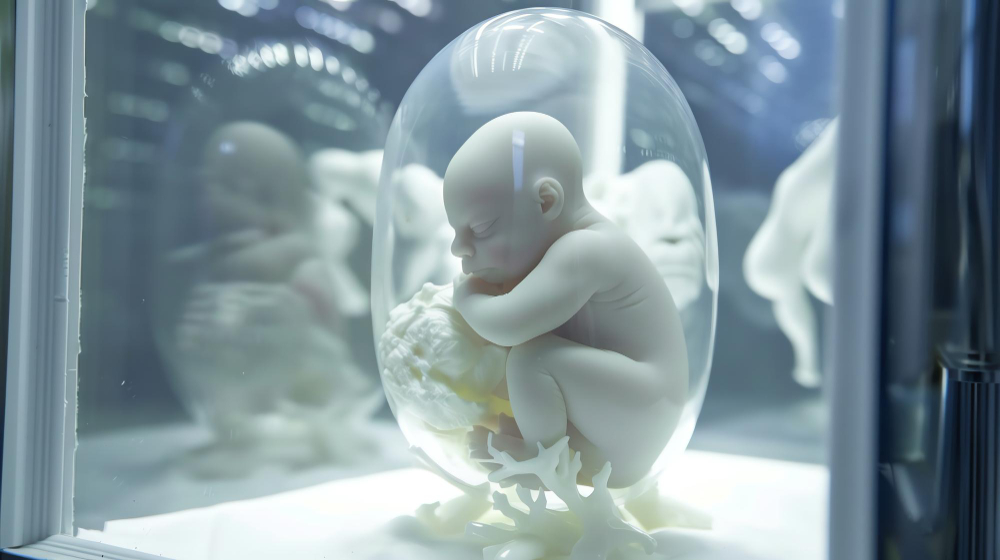
Imagine the time when science will not only assist in making life, but also in protecting it with almost perfect accuracy. The future where the embryologists do not guess about which embryo is the strongest one, because the technology helps them to see it clearly.
That future is already here. And to every couple that has a parenthood dream, it is equivalent to one thing that is a better chance of success and much less stress.
We should have a glimpse at what the modern IVF lab looks like – time-lapse images, artificial intelligence, and smart data are softly redefining the fertility narrative.
The Road To Machine Vision
Embryologists have used the microscope for decades, and their eyes, skill, and experience instructed them at every move. Although this is still the core of embryology, technology is currently enabling it to be super-powered.
Using AI to help select embryos, computers analyse thousands of images and data points to tell which embryos have the highest chance of successful implantation. These systems examine the patterns that the human eye cannot see – the division of the cells, the even growth of the cells, and the formation of the inner and outer layers.
This does not put the embryologist out of business; it makes him more powerful. AI is now a second opinion, an unwavering ally that is more correct and less unpredictable.
The result? More babies are being born, fewer cycles are unsuccessful, and more smiles are in the waiting room.
Time-Lapse Technology: Monitoring Life In Real Time
Previously, embryologists needed to pull embryos out of their incubators to gaze upon at least temporarily (although only for a few seconds). Time-lapse imaging has transformed everything now.
Contemporary incubators have cameras that make thousands of photos of every embryo in a few days. The images are assembled to form a beautiful, continuous film of the exact time and order of every division of the cell.
It is as though the lives are being written, one moment at a time, through the very first pages of life.
By the use of these time-lapse films, embryologists can see the finer nuances that show the embryo’s strength and recovery ability, without being disruptive to their delicate world. It is less dangerous, sweeter, and much more educational.
Suggest to Read :- Embryology & Ethics: When Does Life Begin?
The Rise Of “Smart Incubators”
The incubator is a formerly mere temperature box, but it is now a mini-universe of data and intelligence.
The current smart incubators automatically regulate and check the temperature, oxygen, and carbon dioxide levels in real-time. Others even alert embryologists in case any parameter changes a little so that it can be corrected at once.
This accuracy causes embryos to develop in a stable, serene, and perfectly adapted environment, such as a miniature womb.
The fewer the number of stresses to which an embryo is exposed during these initial days, the higher its possibilities of successful implantation in the future.
More Natural, Less Invasive IVF
The IVF process is becoming softer as technology becomes smarter.
These are time-lapse monitoring embryos, which are not disturbed as frequently. The microfluidic chips, or mini-sized products that mimic the natural flow of fluids in the fallopian tube, are contributing to fertilisation occurring more physiologically.
Even the sperm selection is upgrading. The AI is currently used to find the most successful sperm to undergo the ICSI procedure, enhancing the fertilisation rate and minimising human error.
All these innovations are aimed at one thing only: to get as close to nature as possible with IVF and, at the same time, be extremely exact.
Human Touch Has Been The Most Important
Algorithms, automation, and even in this world, there is one fact that will always remain the same: embryos require empathy, patience, and even human judgment.
Technology provides embryologists with improved tools, yet it is their heart, intuition, and experience that can make the final decision.
They read between the lines and know when an embryo has potential, feel when an embryo is not working out, and know what is going on with the individual couple.
In that way, even though AI can be used to pick the best embryos, it is the embryologist who perceives the story behind the selected embryo.