


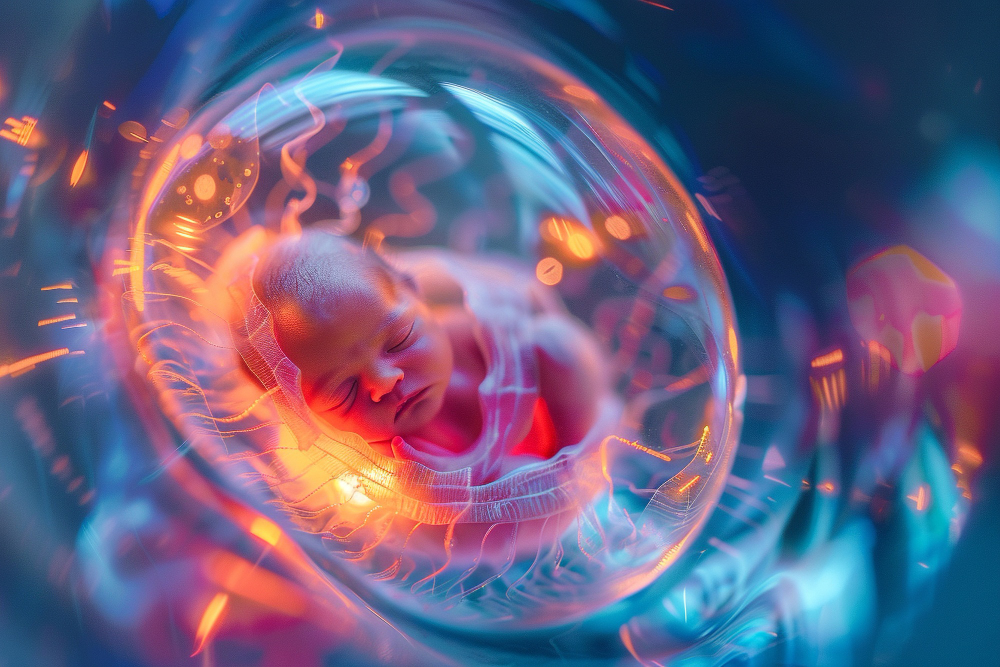
Speaking about IVF, we usually imagine the embryo transfer moment – the moment when the hope literally becomes established. But by the time your embryo is so much as an embryo, they have spent their most tender, vulnerable days in the home designed specifically to house them – the incubator.
The incubator is not merely a laboratory device to an embryologist. It is the safest, the most closely watched house your embryos will ever see- it’s their first cradle before they see you.
We can have a look at how this silent machine brings life long before a heartbeat starts and open the lab door.
A Home That Mimics Nature
A combination of factors is perfectly balanced in a female body; the embryo grows in a kind of space that is well oxygenated, with the temperature, pH, and nutrient levels all being attuned to the food developing. The question of embryologists lies in the possibility of reproducing that natural environment in the absence of the body.
The Incubator Comes In At That
It has the optimal temperature (approximately 37°C, similar to that of the human body), humidity, and a well-monitored concentration of carbon dioxide and oxygen.
Imagine a small womb, a warm, safe place, a stable one, and your embryo develops from cell to cell.
Even such a minor detail as the angle of the culture dish, the air mix, and the duration of the incubator door openness are essential. To your embryologist, a second is a second.
The Art Of Quietness And Stability
The embryos are susceptible to changes. Even a short drop in temperature, a sudden vibration, or even light can interfere with their sensitive developmental process.
That is why the IVF lab is constructed according to one principle: consistency.
Incubators are never opened without reason. Each embryo is to be touched with a pre-arranged rhythm – the accurate, serene, and slow one. Incubators today also have their own mini-chambers, such that upon inspection of the embryos of one patient, the other embryos will not suffer disturbance.
Whenever embryologists enter the laboratory, they enter quietly. It is quiet, there is no hurry, no noise, just the sounds of air purifiers and some gentle beeps of machines working silently.
The History Of The Incubator – Box To Brilliance
Early IVF days used basic incubators, which were temperature boxes. Nowadays, they are technological marvels.
In the modern IVF laboratory, time-lapse incubators are equipped with miniature in-built cameras that take thousands of pictures of every embryo as it grows. This implies that embryologists are in a position to study growth processes – cell divisions, motions, and time without ever having to interfere with the embryo.
These time-lapse videos are useful in determining which embryos have the highest chances of implantation. It is the so-called baby-monitor-embryo, which gives a full-time insight, yet leaves them absolutely unperturbed.
Other sophisticated laboratories are also going to combine this technology with AI algorithms to aid in predicting the viability of embryos. It is not merely an observation of the growth of life in science, but also a learning experience.
Suggest to Read :- Embryos and Emotions: It’s Okay to Feel Everything
The Daily Ritual Of Care
At the beginning of each morning, when the lab is not busy, the embryologists do a check of the incubators, recording temperature, gas levels, and pH levels with almost religious accuracy.
They do not change anything in vain, as it is all about stability. Your incubator is the miniature universe, and your embryo is the star.
Embryologists are almost meditative when it comes to checking development, wearing gloves, slowing down the movements, and keeping their eyes soft. The incubator door will be opened slightly enough for a brief examination, and then closed back again, enclosing the embryo in its protective shell.