


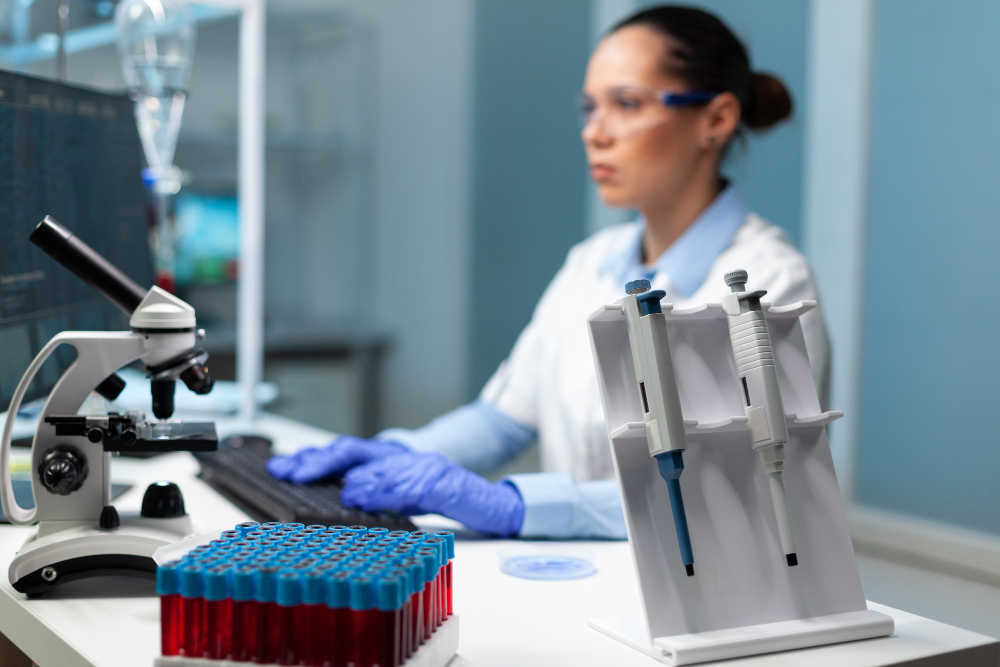
Reproductive medicine is one of the disciplines that has grown at a very rapid rate in the last two decades. With time-lapse incubators and AI-assisted embryo scoring, automation is slowly taking over the IVF laboratory.
These technologies will offer better accuracy, effectiveness, and evidence-based decision-making. However, there is one question that stands out, and that is, is automation in embryology laboratories all good, or is it dangerous in some way?
We think that automation is an effective tool in the right hands; however, it should not be used to substitute experienced embryologists in Embryologist.co.in. Knowledge of where automation is beneficial and where human knowledge cannot be substituted is the key to safe and successful IVF outcomes.
What Does Automation Mean in an Embryology Lab?
Embryology labs Automation in embryology labs is the use of technology to facilitate or carry out functions previously carried out manually. These include:
- The incubators have a time-lapse to monitor embryos continuously.
- Embryo grading systems based on AI.
- Automated sperm analysis
- Online witnessing and sample monitoring.
- Micro-manipulation support: Robotic.
Automation aims at enhancing uniformity and minimizing error. Yet, IVF is not a completely mechanical procedure; it is the case of living cells that react differently in every instance.
The Advantages of Automation in IVF Labs
- Reduced Embryo Handling
A smaller disturbance of embryos is one of the largest benefits of automation. The incubators that work on time-lapse enable embryologists to observe embryos without disturbing them in stable culture conditions.
In Embryologist, this has brought about:
- Greater thermal stability.
- Reduced light exposure
- Better embryo development.
- Improved Data Collection
Automated systems produce high amounts of information about embryo development patterns, division time, and morphology. This helps embryologists:
- Follow minor developmental patterns.
- Objectively compare embryos.
- Enhance the work of the laboratory in the long term.
The automation helps in making more informed decisions, particularly in complicated IVF cases.
- Lower Risk of Sample Mix-Ups
Barcode tracking and digital witnessing systems minimize the chances of error in human identification. These systems are an additional safety and accountability measure within the lab.
- Consistency Across Cycles
Automation assists in the standardisation of repetitive jobs, and this makes the various cycles and operators uniform. This is particularly useful in large IVF laboratories.
Where Automation Raises Concerns
Automation also has risks that could arise in its use in situations where it is not properly supervised, despite its benefits.
- Over-Reliance on AI for Embryo Selection
Embryo scoring AI tools are tools that analyse thousands of images to rank embryos. While impressive, they:
- Rely on existing datasets.
- It is unable to take into consideration the individual patient’s biology.
- May does not consider minor clinical considerations.
The concept of AI as a support tool, rather than a decision-maker, is applied at Embryologist.co.in. The ultimate selection of embryos always requires professional human opinion.
- Loss of Critical Human Observation
There are usually subtle hints that can be observed by embryologists, including cytoplasmic texture, zona quality, or abnormal cleavage patterns, which machines might not prioritise.
Automation may decrease the level of hands-on observation when the labs have too much dependence on the screens rather than on skilled eyes.
- Technology Failure and Dependence
Automated systems are prone to failure. The problem of power, software malfunction, or calibration may jeopardize the safety of embryos unless it is handled with caution.
This is the reason why each automated lab should have:
- Backup systems
- Manual protocols
- Skilled personnel who are willing to step in.
- Skill Erosion Over Time
When embryologists become over-reliant on automation, there is the danger that key manual skills will be lost, especially in processes such as ICSI, vitrification, and sperm selection.
In Embryologist.co.in, hands-on training is a continuous process in which technology does not substitute embryologist knowledge, but instead, complements the knowledge.
Conclusion
Embryology laboratories’ automation is a step forward- but not when it is abused. It facilitates accuracy, minimizes mistakes, and yields useful information. Nonetheless, IVF is not a mass production process. Every embryo is individual, and every choice has life-altering effects.
We are not automation extremists at Embryologist; we just value it as a strong ally, however, it cannot replace talented embryologists. Since in fertility treatment, science can be used to direct the process, but human knowledge safeguards the result.