


Written by Ram Prakash, Clinical Embryologist
Do you know what actually separates IUI from IVF and from ICSI? For couples who are starting out on a fertility journey this is one of the most common sources of confusion there is, and more importantly they are unsure about why a specialist would be recommending one of them over the other two. At the best IUI clinic in Noida Delhi NCR, and right across our fertility services, this is one of the very first conversations which we have with people. So here is a clear breakdown of what each treatment does and of who it actually suits.
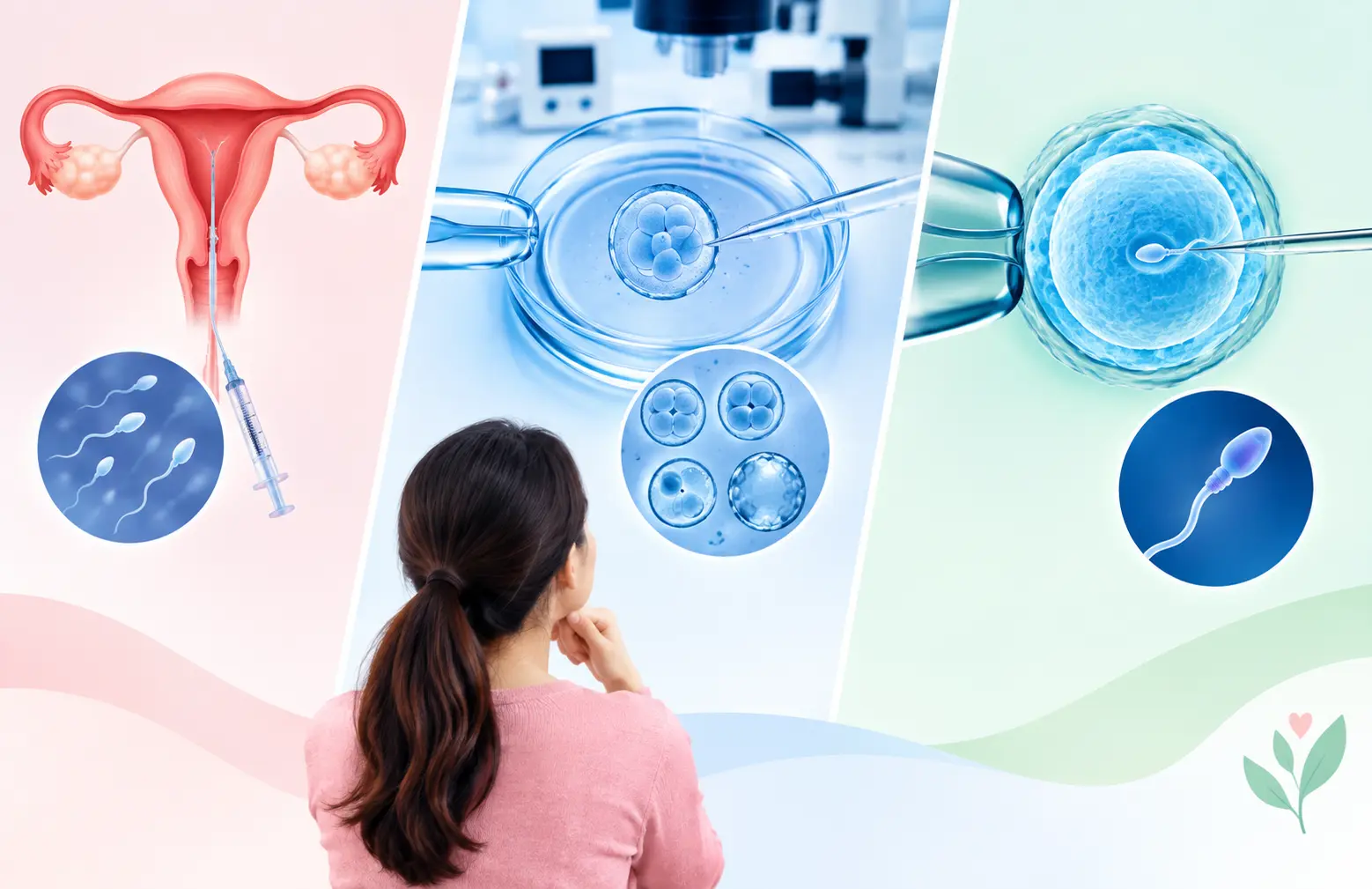
What Is the Core Difference Between IUI, IVF, and ICSI?
The three of them differ in terms of where the fertilisation happens and how it is assisted:
| Treatment | Where Fertilisation Occurs | What Is Assisted |
| IUI (Intrauterine Insemination) | Inside the body, in the fallopian tube | Sperm are concentrated and placed directly in the uterus; the rest happens naturally |
| IVF (In Vitro Fertilisation) | Outside the body, in the laboratory | Eggs and sperm are placed together in a dish; sperm must penetrate the egg independently |
| ICSI (Intracytoplasmic Sperm Injection) | Outside the body, in the laboratory | A single sperm is injected directly into each egg by an embryologist |
When Is IUI the Right Choice?
IUI is the least invasive of the options and it is appropriate where the cause of your infertility is mild or unexplained and where the fallopian tubes have been confirmed as being open. The common indications for it include:
- A mildly low sperm count or motility, where the sperm are still able to fertilise an egg independently
- Unexplained infertility in women who are under 35 and who have good ovarian reserve
- Cervical factor infertility, which is where the cervical mucus is preventing the sperm from reaching the egg
- The use of donor sperm, because IUI is the standard first approach for single women or for same-sex couples who are using sperm donation
However, IUI does not help you where the sperm quality is severely compromised, or where the tubes are blocked, or where the egg quality or the ovarian reserve is significantly reduced. Success rates per IUI cycle typically range from 10 to 20% and this depends on your age and on the indication. That is lower per cycle than IVF is, but the lower cost along with the lower invasiveness is what makes it a reasonable first step in the candidates who suit it.
When Does IVF Become Necessary?
IVF is what gets recommended where fertilisation is unlikely to occur naturally or with IUI on its own:
- Blocked or absent fallopian tubes, because the eggs cannot reach the sperm without laboratory assistance
- Endometriosis which is affecting your fertility
- Moderate-to-severe diminished ovarian reserve, where stimulation is needed in order to retrieve multiple eggs
- Multiple IUI cycles which have already failed
- Age-related decline, where the efficiency of the natural or low-intervention approaches is simply insufficient
Moreover, at the best IVF clinic in Noida Delhi NCR, IVF is also the necessary platform for the additional investigations such as preimplantation genetic testing, and those cannot be done at all without a laboratory embryo culture phase.
When Is ICSI Added to IVF?
ICSI is a laboratory technique which gets used within an IVF cycle, so it is not a separate treatment at all but rather a modification of how the fertilisation is performed inside the lab. It is recommended when:
- Your sperm count, motility or morphology is significantly below normal
- The sperm have been surgically retrieved, whether from TESE, PESA or Micro-TESE, and they are limited in number
- Frozen sperm are being used, where the post-thaw motility is reduced
- A prior IVF cycle has resulted in fertilisation failure which was complete or near-complete
As the best ICSI clinic in Noida Delhi NCR, our embryologists perform ICSI routinely for the male factor cases, which ensures that each mature egg has the best possible chance of fertilisation regardless of what the sperm count is.
How Is the Right Treatment Chosen?
The Evaluation That Guides the Decision
The decision gets made on the basis of a complete evaluation of both partners, meaning the semen analysis, the ovarian reserve testing, the tubal assessment and the medical history. No treatment here is universally superior to the others, and each one is appropriate for a specific clinical picture.
At Embryologist.co.in the right recommendation starts with the right investigation, because advising IVF when IUI would have been sufficient wastes your resources, and recommending IUI when ICSI is what is indicated wastes your time instead. Whether you are starting at a best IUI clinic in Noida Delhi NCR or moving directly across to IVF with ICSI, the right path always begins with the right information.
This article is for general educational purposes and is not a substitute for personalised medical advice from your fertility specialist or embryologist.